The Stanford Standoff
By Ayush Deshpande
In August 2025, “The Stanford Daily”—Stanford University’s student-run newspaper—filed a lawsuit against Secretary of State Marco Rubio, arguing that the federal government’s use of deportation to threaten foreign activists poses an active threat to free speech. Their decision to sue was primarily motivated by a responsibility to protect staff and students who fear speaking out due to threats from the government. If students and staff cannot voice their perspectives freely, freedom of speech—a core principle of journalism—is seriously undermined.
To justify the government's actions, Rubio has cited the 1952 Immigration and Nationality Act, which states that the U.S. can deport non-citizens who cause adverse foreign policy consequences. Rubio claims that foreign students may only study in the US, not participate in activism—doing so would fall outside the conditions of their visa and be grounds for removal. Since Trump returned to office, Reuters reports that over 8,000 student visas have been revoked. Although the majority of these were due to violations of the law, some were revoked for vaguely defined “terrorist activity,” leading many foreign students to stifle their disapproval of government policies out of fear that their opinions could lead to their removal from the country.
“When the government frames speech as a visa violation, it feels less like law enforcement and more like using censorship to keep certain opinions quiet. It is clear that this is an attempt to control what gets said and what gets exposed,” Junior Jacob Hsueh said.
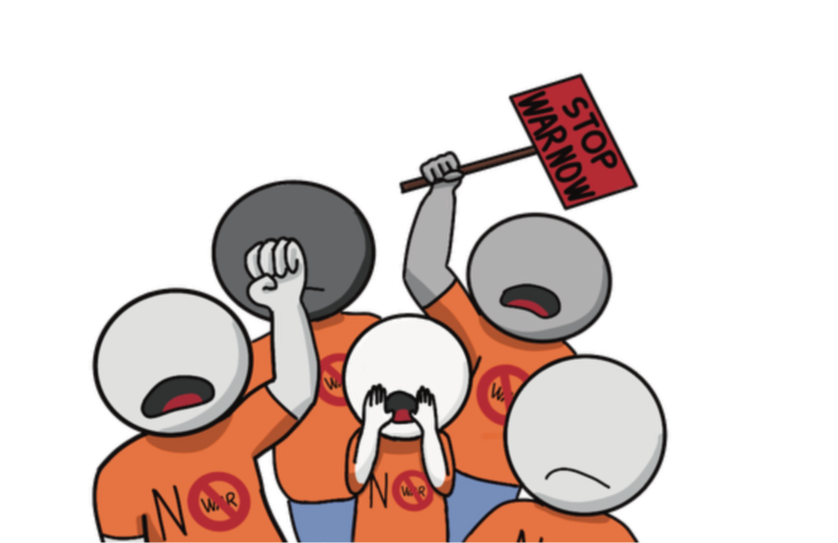
Yet, visa holders legally have the same First Amendment rights as citizens. In the 1945 Bridges v. Wixon case,
the Supreme Court outlined that foreigners and immigrants have the right to free speech and press, and that while immigration enforcement can punish those who commit crimes, the threat of deportation cannot be used to limit free speech. Many of the current administration's justifications for revoking visas conflict with the Supreme Court’s ruling, showing their willingness to violate one’s constitutional rights in pursuit of their political agenda.
Threats to free speech have a particularly damaging effect on student-run journalism. Student journalists depend on open dialogue to report on issues. If international students are in fear of deportation for simply being quoted in an article, crucial perspectives could go unreported. Staff members of the Stanford Daily have even quit or avoided writing political articles due to the threat of having their visas revoked for voicing their opinion. This climate of fear impedes the authenticity of papers across the country as they cannot accurately write about issues and topics concerning their student bodies. Dozens of other journalism organizations and student-run newspapers have joined to protect diverse viewpoints in the press, backing the Stanford Daily’s lawsuit—including The Foundation for Individual Rights and Expression, Student Press Law Center and the Associated Collegiate Press.
The Trump Administration’s use of fear to control the voices of international students is clearest in the case of Mahmoud Khalil, a lawful green card holder and permanent resident of the United States. In 2025, he was detained by ICE due to claims that his peaceful pro-Palestinian activism compromised national security. This made it clear that even those who enter the country legally must live in fear of deportation if they express opinions that contrast with those of the government. Following Khalil's detainment, ICE deportations have become even more rampant, intensifying the alarm of many international students who fear for their futures in this country.
“Free speech sounds absolute in theory, but in practice, it depends on whether people feel safe using it. If students have to weigh their future against their voice, then speech becomes conditional. That’s when a right afforded to anyone in the United States starts to feel like a privilege for those lucky enough to be born here,” Senior Oliver Kutzler said.
Targeting foreign nationals creates a system that silences the voices of international students. The Stanford Daily lawsuit marks a pivotal moment for student newsrooms across the country, asserting that student journalists should be able express their perspectives freely regardless of immigration status. If successful, it could set a crucial precedent, protecting the indispensable freedom of the press.
About the Contributor

Ayush Deshpande
staff writer
Ayush Deshpande is a junior at Leland High School, he is a staff writer for the charger account. He is very interested in Formula One, Legos, Star Wars, and when not at school or playing video games he is often found at K1 Speed or his freinds houses.

Ryan Park
artist
Ryan Park is a junior at Leland High School who is an artist for The Charger Account. When he is not residing at the gym, he likes to mess with his cats and read manga.


Comments